
Serengeti Safari Guide: Choose the Right Region for Your Dates
Match Central, South/Ndutu, Western Corridor or Northern Serengeti to your travel dates, migration goals and realistic number of nights.
The most important Serengeti question is not whether to go, but where to stay for your dates. Central Seronera is the broadest year-round base; the southern plains and Ndutu area fit the green-season calving ecology; the Western Corridor becomes relevant during the northwest transition; the north fits Mara River opportunities. These are probabilities shaped by rain—not appointments with herds.
Choose a Serengeti region
| Region | Typical planning window | Best fit | Trade-off |
|---|---|---|---|
| Central / Seronera | Year-round | First visit, resident predators, short 2–3 night stay | Busier and not always closest to migratory herds |
| South / Ndutu | Roughly late December–March | Calving ecology, young animals and green-season photography | Ndutu spans management areas; confirm camp location and fees |
| Western Corridor / Grumeti | Roughly May–July | Northwest movement and varied river/woodland habitat | Migration relevance is seasonal, not year-round |
| North / Mara River | Roughly July–October | River-crossing opportunities and longer remote stays | Crossings cannot be timed or guaranteed |
| East | Season-dependent | Repeat visitors, open country and lower vehicle density | More limited and seasonal access/camp choice |
Migration calendar without promises
Around January–March attention usually shifts to the southern plains and calving; April–May is a wet, green transition; May–July often brings movement through central and western areas; July–October draws attention north toward the Mara River; November–December can bring an uncertain return south with the short rains. Actual herd position can lead or lag this outline. A river crossing may happen before arrival, after departure or in another channel.
How many nights and how to combine them
4 days: one-region fly-in
Arusha → Central Serengeti → fly out
Maximises field time for a short trip. Stay within one sector rather than chasing the whole migration map.
6 days: first Northern Circuit pairing
Ngorongoro → Central Serengeti
Pairs crater/highland landscapes with multi-day plains ecology; the areas are adjacent but separately managed.
7–8 days: two-region migration plan
Central 2–3 nights + South, West or North 3–4
Central provides resident wildlife while the seasonal sector targets the likely migration stage.
8–10 days: broader Northern Circuit
Tarangire → Ngorongoro → Serengeti
Drive in and fly out when practical to reduce backtracking.
10+ days: Serengeti and Zanzibar
Serengeti → internal flight → Zanzibar
Leave flight buffers and do not compress the wildlife portion merely to add a beach label.
Wildlife beyond the migration
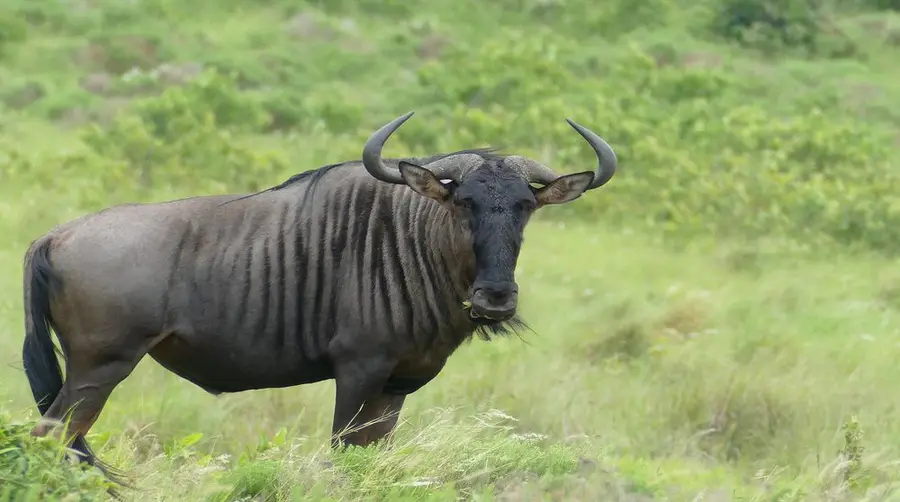
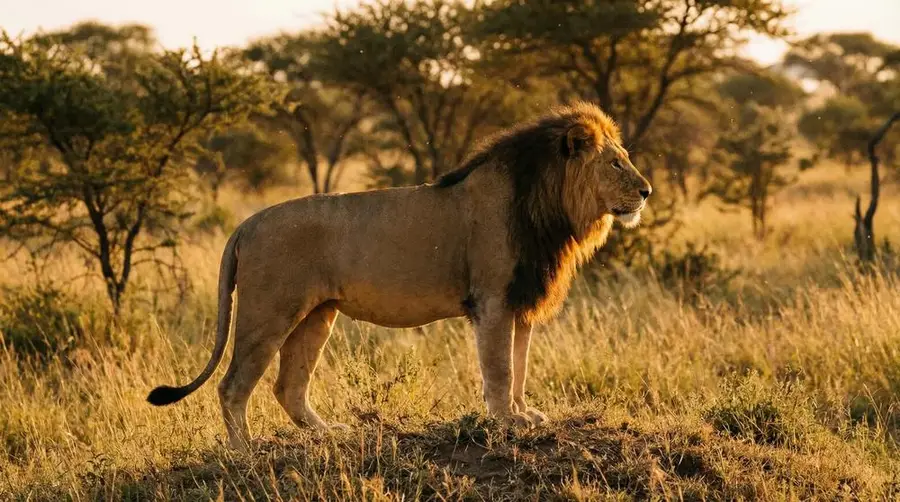
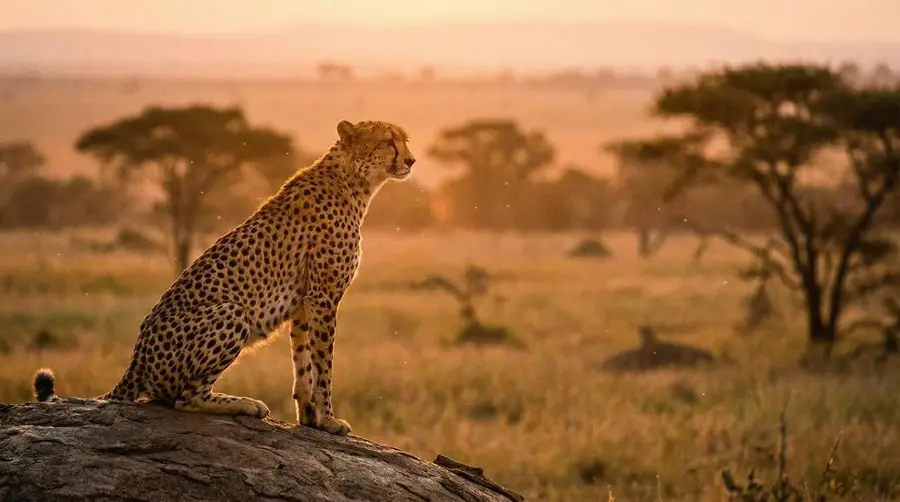
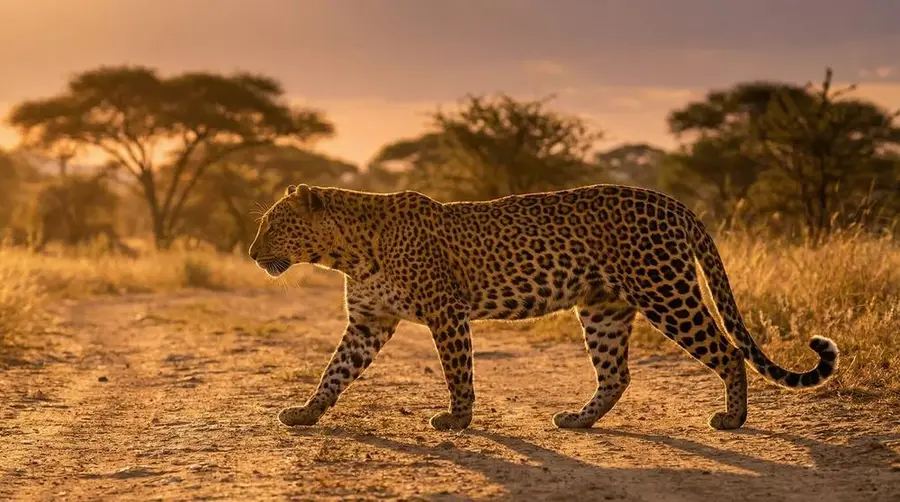
Serengeti’s value is the year-round predator–prey system across grassland, kopjes, river valleys and woodland. Lions, cheetahs, leopards, hyenas and resident herbivores remain meaningful when the largest wildebeest concentrations are elsewhere. Record behaviour and habitat rather than treating every drive as a search for one spectacle.
 LC
Blue Wildebeest
Connochaetes taurinus
 Big Five VU
Lion
Panthera leo
 VU
Cheetah
Acinonyx jubatus
 Big Five VU
Leopard
Panthera pardus
 NT
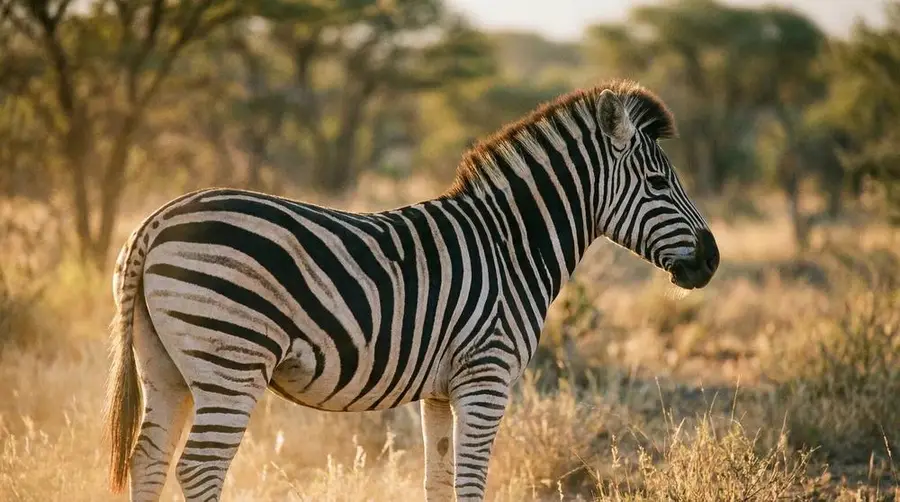
Burchell's Zebra
Equus quagga burchellii
 LC
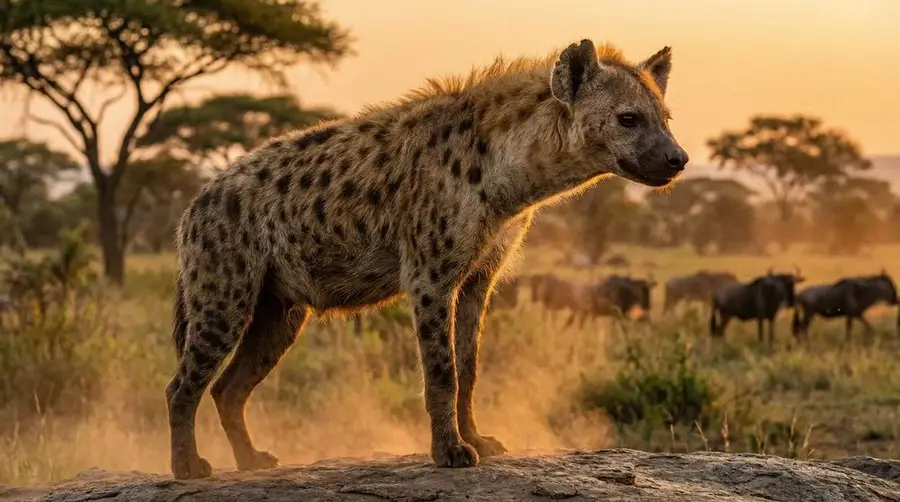
Spotted Hyena
Crocuta crocuta
Continue planning
Sources and further reading
- TANAPA — Serengeti attractions: https://www.tanzaniaparks.go.tz/serengeti/attractions
- TANAPA — Serengeti visitor guide: https://tanzaniaparks.go.tz/serengeti/visitor-guide
- TANAPA — Mara River crossing guideline: https://www.tanzaniaparks.go.tz/uploads/publications/en-1724693797-MararivercrossingGuideline.pdf
- UNESCO — Serengeti National Park: https://whc.unesco.org/en/list/156/
- Ngorongoro Conservation Area Authority — Rules: https://www.ngorongorocrater.org/regulations.html
Do it with SafariLingo
Use SafariLingo to identify Serengeti species and record behaviour, habitat and location. Camp and transport bookings belong with licensed operators.
Get the appFrequently asked questions
How many nights should I spend in Serengeti?
Allow at least two to three nights in one sector. Combining Central with a seasonal sector needs more time; one night is usually dominated by transfers.
What is the best month for the Great Migration?
There is no single best month. Roughly, south/Ndutu fits January–March, central/west May–July, and north July–October, but rainfall changes actual positions.
Can a river crossing be guaranteed?
No. Even beside the Mara River, herds may wait, cross elsewhere or move outside your dates.
Central or Northern Serengeti?
Central is the safer year-round first base for resident wildlife. The north better matches July–October river opportunities. With enough time, combining both can spread risk.
Related guides
National Parks Best Time to Visit Serengeti National Park
When to go on safari in Serengeti National Park, Tanzania: the best months for wildlife, the difference between the dry and green seasons, and what to expect at each time of year.
National Parks Top Wildlife to See in Serengeti National Park
The wildlife of Serengeti National Park, Tanzania: the signature mammals, birds and predators to look for on safari, and the field craft that helps you find them.
National Parks Photographing Wildlife in Serengeti National Park
A wildlife photography guide to Serengeti National Park, Tanzania: the best light, locations, seasons and techniques for capturing memorable safari images.